What Antigua and St Kitts announced in November 2026
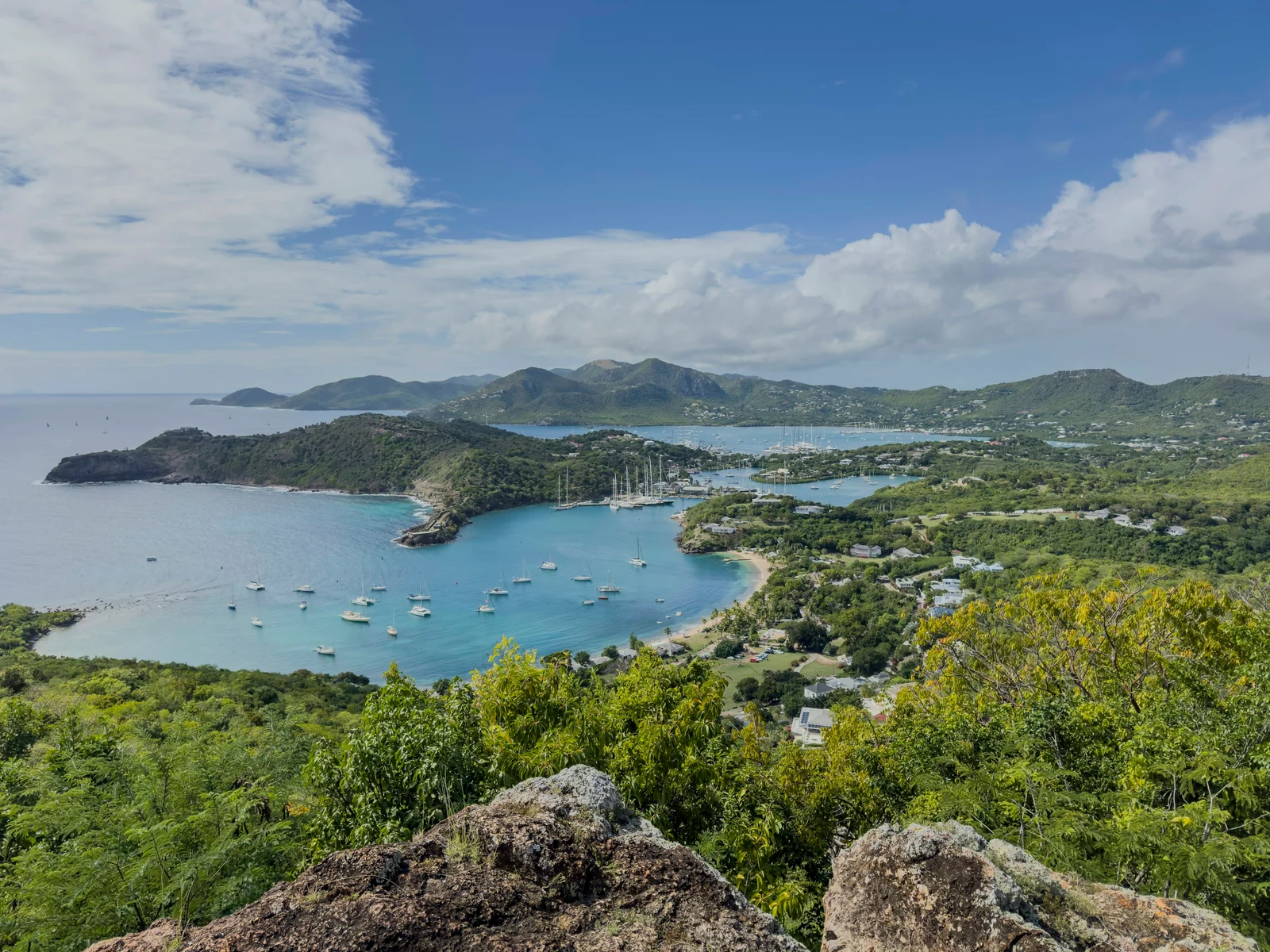
Antigua and Barbuda’s CIU memorandum of November 12 confirms that applications remain open. It records the government’s intention to wind down the programme and its request for a transition until the end of 2030. The EU correspondence identifies June 1, 2028 as the requested phase-out date.
St Kitts and Nevis’ CIU statement of November 16 confirms a gradual transition following the Prime Minister’s November 13 address. Applications continue until a final date is announced. Anyone planning an application needs to take this policy direction seriously.
Why dependence on CBI revenue matters
When advising on investment citizenship, I start by asking what the programme does for the country itself. For small island economies, CBI receipts help fund infrastructure and public spending. Replacing that income takes time and a credible financing plan.
The IMF’s 2024 Dominica report puts CBI revenue at 36.6% of GDP in fiscal year 2022/23. This is a figure for a particular fiscal period. It should not be presented as a permanent measure of the economy or a current-year result.
In its 2025 consultation on St Kitts and Nevis, the IMF estimated that the fiscal deficit had risen to about 11% of GDP in 2024, mainly following a sharp decline in CBI revenue. That demonstrates the sensitivity of public finances to programme changes.
I therefore expect difficult negotiations over transition periods, financing and the future of investment migration. Budget dependence makes closure expensive for the government. Governments still have to weigh those costs against their international relationships and other policy objectives.
The scenario I would plan around
An announced deadline creates demand for fast decisions. It can also encourage families to treat anxiety as a sufficient reason to make a large payment. I would first check the documents governing the specific programme, acceptance of the application and the treatment of money paid if the rules change.
My working scenario is an extended negotiation and a restructuring of conditions. Stronger screening, genuine-link requirements, revised investment thresholds and a negotiated transition to other formats are possible. A family’s plan should accommodate both the survival of some routes and the closure of individual programmes.
This is my professional assessment. The outcome of negotiations, a record intake of applications and future programme prices cannot be established in advance. I would revisit the scenario as new legal instruments are published.
How Schengen risk changes the investment decision
For a family considering citizenship primarily for European travel, the durability of the visa regime is a substantial part of the purchase decision. Programme access, an existing citizenship and entry conditions each need to be assessed against the documents that govern them.
The Council of the EU has added investor citizenship schemes granting nationality without a genuine link to the country as a ground for suspending visa exemption. The concern therefore extends beyond individual screening failures. Ending new applications does not itself commit the EU to preserving visa-free access.
Over the next two to three years, I would regularly reassess the European travel assumptions behind a citizenship purchase. That planning horizon gives a family time to prepare another route. Any date for a visa change will depend on EU decisions, so the timing remains uncertain.
Allow for screening and the full cost of the application
Stricter standards already have a regional framework. The CBI memorandum being implemented with OECS and ECCB participation provides for a US$200,000 minimum investment price from July 1, 2024 and cooperation on programme regulation.
For an applicant, the practical questions are eligibility and the complete cost of the case. I would discuss source of funds, family screening, additional documents, government charges and refund terms. Possible increases in application costs also deserve attention before choosing a route.
How I would combine citizenship and residence planning
If a family’s goal is a long-term base in Europe, I begin with a suitable residence route, its budget and renewal conditions. A second citizenship can complement that plan depending on the family’s existing nationality and goals.
Vanuatu can be considered within such a combination after checking eligibility. The EU ended its visa exemption in 2024. A qualifying Schengen residence permit provides its own residence and travel rights. A valid Schengen permit generally allows short visits to other Schengen countries for up to 90 days in 180.
For a five-to-ten-year horizon, I prefer a plan with clear residence rights, renewal requirements, costs and actions to take if rules change. Greece and other available residence routes should be compared against the family’s circumstances. Each application will have its own requirements and a decision by the relevant authority.
My recommendation to clients and colleagues is to discuss what needs to work several years from now. Which document will the family use, where can it live and what will maintaining the status cost? Those answers give the decision a clear purpose and realistic expectations.
Frequently asked questions
Have Caribbean citizenship programmes already closed?
The Antigua CIU memorandum of November 12 and St Kitts CIU statement of November 16, 2026 confirm continued acceptance of applications. Check each country’s transition terms and final dates before filing.
Will Caribbean passports keep Schengen visa-free access?
Future access depends on EU decisions. A programme continuing or winding down does not guarantee preservation of visa exemption. The two-to-three-year planning horizon discussed here does not establish a date for its removal.
Does budget dependence guarantee the survival of CBI?
Dependence makes a transition economically difficult. Governments also weigh international relationships and can choose to wind down a programme. Sveta Zheremiash’s scenario remains an opinion.
Is Vanuatu citizenship with European residence suitable for every family?
Citizenship and residence eligibility need separate assessment of nationality, source of funds and the intended residence route. This combination requires individual advice and does not provide automatic approval.
Sources
- Antigua and Barbuda CIU memorandum, November 12, 2026
- St Kitts and Nevis CIU statement, November 16, 2026
- IMF — Dominica, 2024 Article IV
- IMF — St Kitts and Nevis, 2025 Article IV
- Council of the EU — visa suspension rules
- OECS — CBI memorandum implementation
- Council of the EU — Vanuatu visa exemption
- European Commission — travel with residence status